The blueprint for buried, spinning worlds.
Atlas Gyre fuses three breakthroughs — passive regolith shielding, hybrid artificial gravity, and in-situ manufacturing — into one coherent habitat architecture.
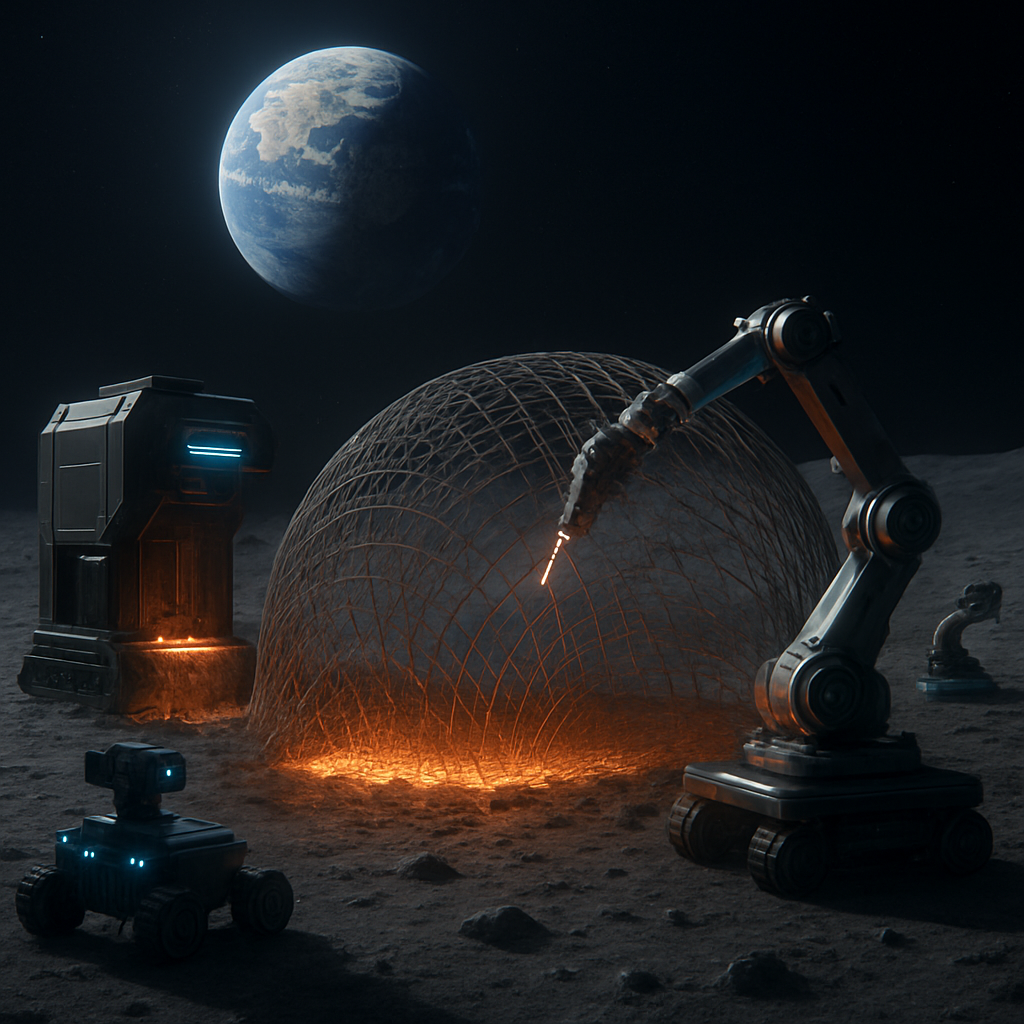
Six engineered systems, one living habitat
Regolith-Buried Shell
A sintered-regolith and basalt-fiber pressure dome is entombed under multiple meters of loose regolith, providing passive radiation, thermal, and impact protection.
Tethered Gyre Drive
A counter-rotating tethered or rail-mounted gyre spins habitation decks to generate Earth-equivalent centripetal gravity inside the static dome.
ISRU Manufacturing
Local regolith is melted, sintered, and drawn into basalt fiber and printable feedstock — turning the ground itself into structure.
Autonomous Construction
Robotic excavators and large-format 3D printers build and bury the shell before crews arrive, minimizing human exposure during assembly.
Thermal Regulation
Regolith overburden buffers extreme day–night swings, while closed-loop systems hold a stable, Earth-like internal climate.
Closed-Loop Life Support
Bioregenerative agriculture and recycling sustain air, water, and food within the dome for true long-term self-sufficiency.
Baseline habitat parameters
- Dome radius
- 50 – 100 ft modular
- Regolith overburden
- 4 – 8 meters
- Gyre gravity output
- 0.38 – 1.0 g (tunable)
- Shell material
- Sintered regolith + basalt fiber
- Radiation reduction
- > 95% vs. surface
- Design life
- Multi-generational (100+ yrs)
- Construction
- Autonomous, pre-crew
- Deployment targets
- Lunar mare & Mars regolith plains